

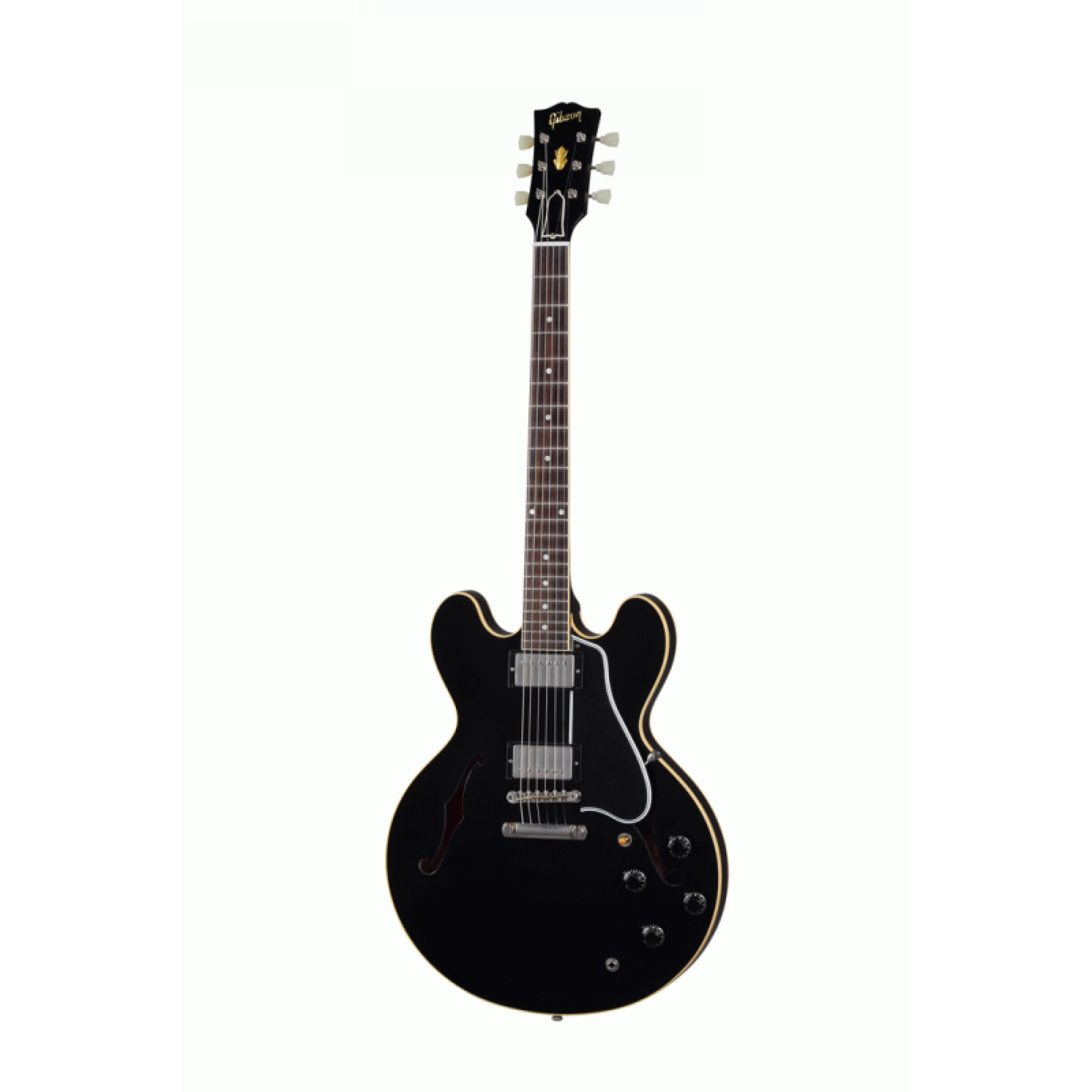
Gibson Custom Shop Murphy Labs 59 Es335 Ultra Lt Aged Ebony – Expression Of Interest
Original price was: $12.00.$8.40Current price is: $8.40.
- Quality and Affordability Combined
- Safeguard Your Shopping Experience
- Multiple safe payment methods
- Multiple payment methods, 100% payment security

Gibson Custom Shop Murphy Labs 58 Les Paul Std Ult Lt Aged Ch Burst
Accepting Expressions of Interest – Contact us for Sale pricing and Availability
The 1958 Les Paul™ Standard Reissue features all the painstaking historic construction methods of the famous ’59 Reissues with a few historically-accurate spec differences that allow it to stand on its own. Like the 1958 originals, it has narrow frets which help more of the fingerboard wood to be heard in the tone profile. It also has a round, chunky neck profile for a full feel and maximum bending leverage. It has a beautiful plain maple top; each is unique and full of character. It also features Ultra Light Aging by the skilled artisans of the Murphy Lab. The Murphy Lab Ultra Light Aged finish treatment, paired with lightly aged hardware, simulates decades of light play wear, giving it the unique character, vibe, and feel of an original example from the Gibson Golden Era.
Neck Material – Solid Mahogany
Neck Profile – Chunky C-Shape
Scale Length – 24.75
Fingerboard Material – Indian Rosewood, Hide Glue Fit
Fingerboard Radius – 12
Number Of Frets – 22
Frets – Historic Gibson Narrow/Tall
Nut Material – Nylon
Nut Width – 1.687
End of Board Width – 2.24
Inlays – Aged Cellulose Nitrate Trapezoid
Joint – Long Tenon, Hide Glue Fit
BODY
Body Shape – Les Paul
Top – 2-Piece Plain Maple, Hide Glue Fit
Back – 1-Piece Lightweight Mahogany
HARDWARE
Hardware Finish – Nickel; Murphy Lab Light Aged
Tuner Plating – Nickel
Bridge – No-Wire ABR-1
Saddle Material – Nickel-plated Brass
Tailpiece – Lightweight Aluminum Stop Bar
Tuning Machines – Kluson Single Line, Single Ring
Pickguard – Laminated Cellulose Acetate Butyrate
TrussRod – Authentic 1950s No-Tube
Truss Rod Cover – Authentic Stepped 2-Ply
Control Knobs – Butyrate Gold Top Hats
Switch Tip – Amber Catalin
Switchwasher – Silkscreened Cellulose Acetate Butyrate
Jack Plate Cover – Laminated Cellulose Acetate Butyrate
Control Covers – Black Royalite
Strap Buttons – Aluminum
Mounting Rings – M69 Cellulose Acetate Butyrate
Pickup Covers – Authentic Profile Nickel Silver
ELECTRONICS
Neck Pickup – Custombucker Alnico 3 (Unpotted)
Bridge Pickup – Custombucker Alnico 3 (Unpotted)
Accessories – Certificate of Authenticity, Mounted Custom Shop Switch Plate Medallion; Reissue Switch Backplate in Case
What is Murphy Lab Aged?
Gibson Murphy Lab Aging is a proprietary process used by Gibson to artificially age its guitars and create a vintage look and feel. The process is named after Tom Murphy, who was the first person to develop the aging techniques used by Gibson.
The Murphy Lab Aging process involves various techniques, such as hand-sanding, staining, and distressing, that simulate the natural wear and tear that a vintage guitar would experience over time. The process can take several weeks to complete, and it is performed by highly skilled craftsmen at Gibson’s Custom Shop.
During the aging process, the Gibson Murphy Lab team carefully replicates the signs of aging that are commonly found on vintage guitars, such as finish checking, rusted hardware, and faded color. The aging leaves the finish much softer yet more brittle resulting is a guitar that looks and feels like a vintage instrument, with a worn-in feel and a unique character that will continue to age as the guitar does.
Murphy Labs aged finishes will continue to age and wear easily as you play and use the guitar creating an even more unique instrument
“Like an old finish, it isn’t very durable. It’s not for everybody but it is awesome for ageing. Not only does it enhance the checking, when we’re chipping it to create buckle rash it responds like an old finish. When I first saw it happen I was really excited, and I still am today. So, I don’t have to do art any more, I can now do craft.” – Tom Murphy
| Ultra Light | Light | Heavy | Ultra Heavy |
|---|---|---|---|
| Like a prized possession that has spent most of its long life stored carefully in its case. Murphy Lab artisans apply the most subtle touches such as minimal lacquer checking, Vintage Original Sheen (VOS) hardware, and hand-rolled fingerboard binding. | Simulates fifty years of average play wear, a favorite guitar that rarely left the comforts of home. More intense lacquer checking patterns, unique to each instrument, are accompanied by light dings, pick trails, finish flaking, and softened edges throughout. Paired with Vintage Original Sheen (VOS) hardware and hand-rolled fingerboard binding. | This baby’s been out on the road — for decades, it seems. Significant wear and tear, lots of buckle rash, light arm wear, neck wear, peghead face wear, and prominent checking patterns throughout. Paired with Murphy Lab heavy-aged hardware and hand-rolled fingerboard binding. | Like the old favorite your hero has performed with for decades. Our artisans evoke half a century of touring mileage, with major buckle rash, heavy arm wear, visible pick, neck, and peghead face wear, and areas of exposed wood. Paired with Murphy Lab heavy-aged hardware and hand-rolled fingerboard binding. |
The Finish
| Checked Finish Gibson scientifically reverse-engineered the original formula of nitrocellulose lacquer used in the 1950s and 1960s. Combined with Tom’s proprietary aging techniques, this brittle lacquer checks beneath the surface for an authentic vintage look and feel. | |
| Hardware Patina Murphy Lab artisans gently age each knob and component to simulate years of play wear, matching the worn body to create the look and feel of a well-traveled instrument — that works like new. | |
| Murphy Mileage Wear on the neck, where the neck would be worn. The back of the body scraped bare where a belt buckle would bump. Your Murphy Lab Gibson will look like an heirloom from the moment you open the case. |
Nitro
| One of the most distinctive features of aged nitrocellulose lacquer is the checking or cracking that can occur in the finish. This is caused by the contraction and expansion of the wood underneath the finish due to changes in temperature and humidity. As the wood expands and contracts, the lacquer finish is unable to keep up, and it begins to crack in a beautiful natural way. The checking pattern on a guitar is unique to each instrument and can be the defining characteristic of a guitar. It’s worth noting that while checking is seen as a desirable feature, with extra aging and playing, it can cause the finish to flake off entirely creating wear that is unique to your instrument based on how you play it. The proprietary Murphy Labs Aging process has given your instrument a head start in its natural aging process |
What’s special about each year?
The Gibson Les Paul guitars produced between 1956 and 1960 are often referred to as the “Golden Era” of Les Paul production. Each year brought some changes and differences in features, specs, and finishes. Here are some of the notable differences:
1956P-90 pickups (single coil) were still the standard pickup configuration, though some Les Paul Customs had three humbucker pickups. |
1957PAF (Patent Applied For) humbucking pickups were introduced, replacing the P-90 pickups. |
1958Cherry Sunburst finish became the standard finish option. |
1959Often considered the pinnacle of the Les Paul model, featuring a thicker top with more flame figuring. |
1960The last year of the “Burst” Les Pauls before production was temporarily discontinued. |
| Series | No |
|---|---|
| SKU | 8300415 |
| warehouse_eta | NoStockAvailable |
| Colour | N/A |
| Warranty | Yes |
Be the first to review “Gibson Custom Shop Murphy Labs 59 Es335 Ultra Lt Aged Ebony – Expression Of Interest”
Related products
Guitars
Acoustic Guitars
Reviews
There are no reviews yet.