
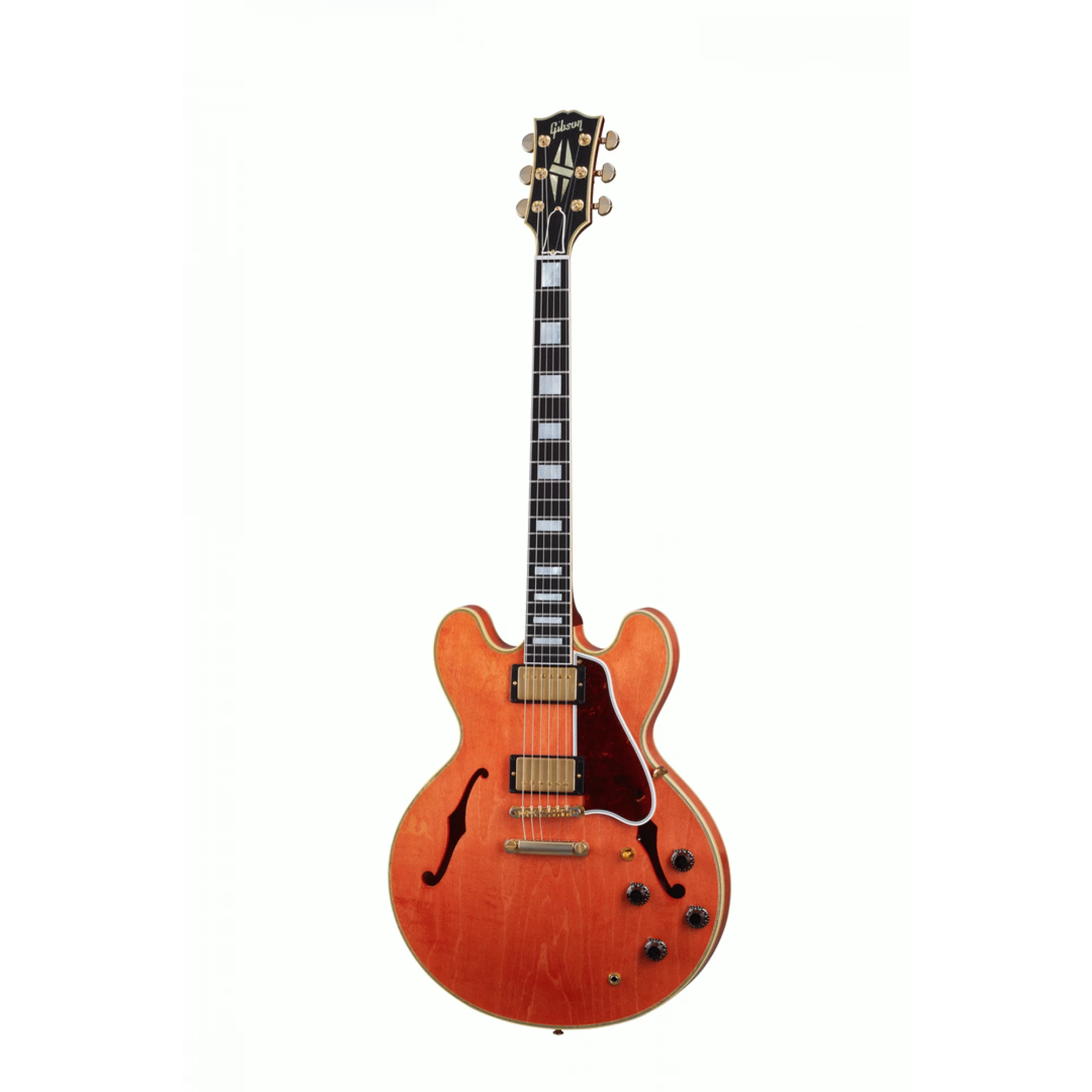
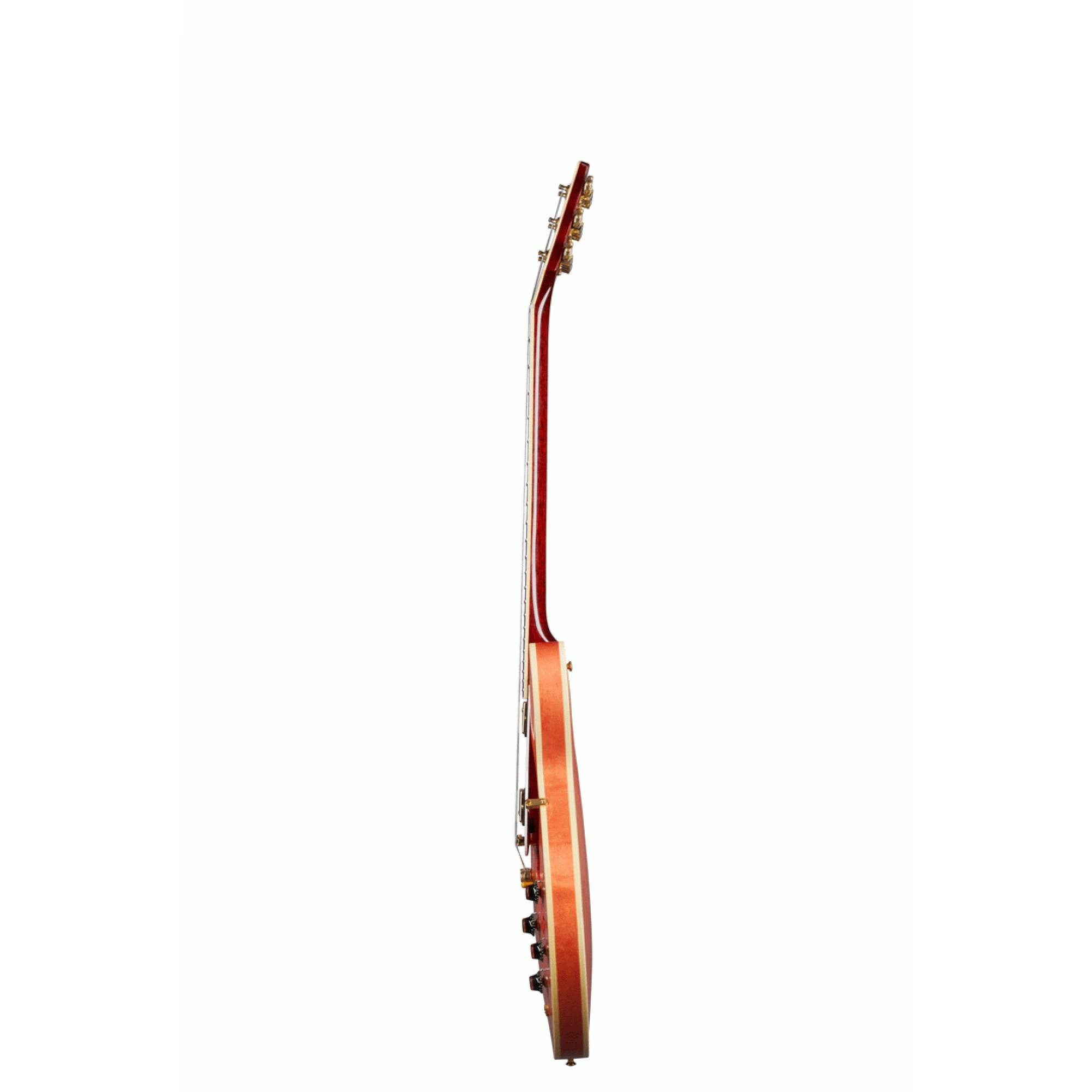
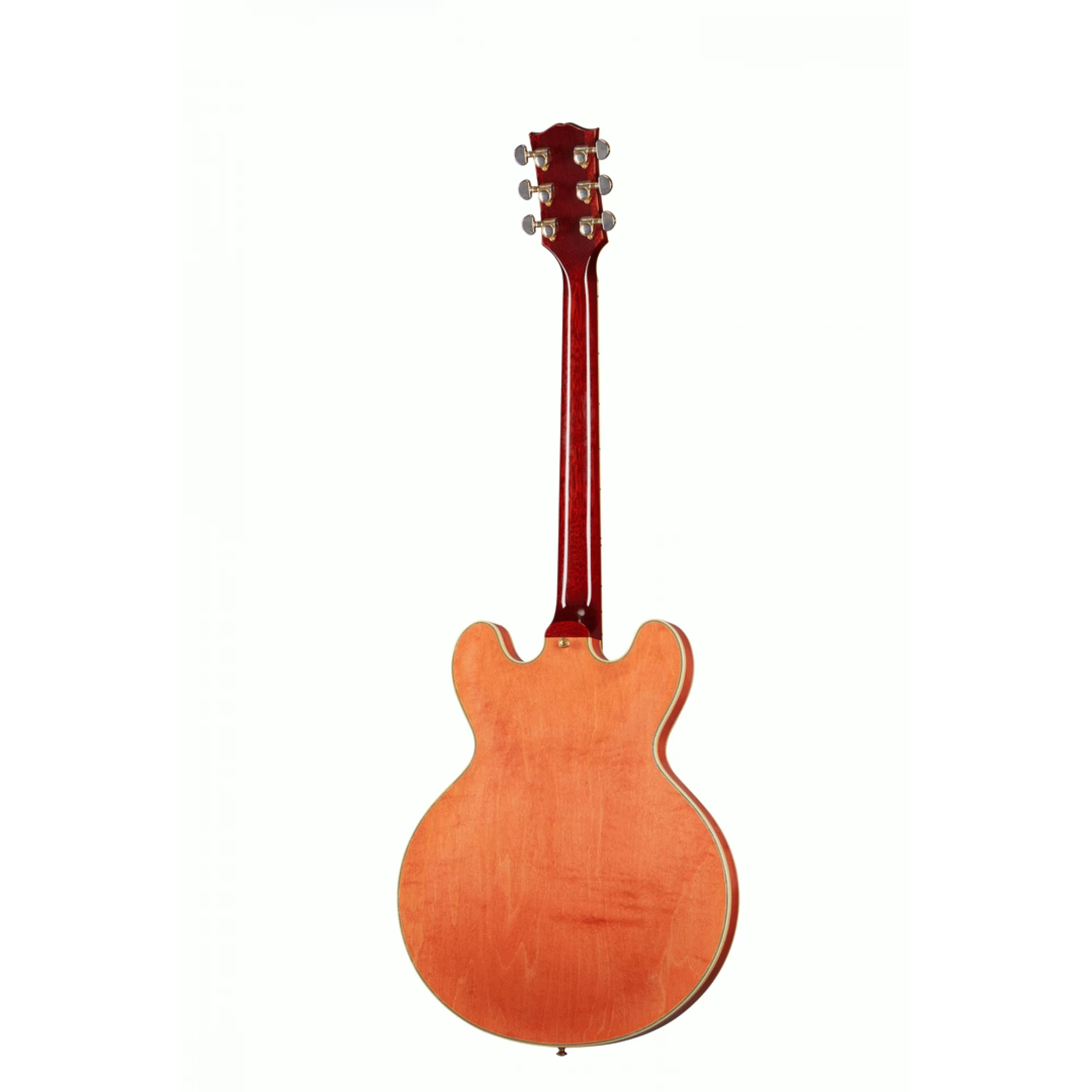
Gibson Custom Shop Murphy Labs ES335 Watermelon – Expression Of Interest
Original price was: $15.00.$10.50Current price is: $10.50.
- Quality and Affordability Combined
- Safeguard Your Shopping Experience
- Multiple safe payment methods
- Multiple payment methods, 100% payment security

Gibson Custom Shop Murphy Labs ES335 Watermelon
Accepting Expressions of Interest – Contact us for Sale pricing and Availability
The King of the ES Models
Gibson Custom Shop is the pinnacle of craftsmanship, quality, and sound excellence. Each instrument celebrates Gibson’s legacy through accuracy, authenticity, and attention to detail.
What could be better than the legendary ES-335? The ES-355! The ES-355 starts with all the features that make the ES-335 iconic – the feedback-resistant semi-hollowbody construction, the two humbucking pickups with individual volume and tone controls, the legendary sonic versatility and exceptional playability – and kicks it into overdrive with an ebony fretboard that’s adorned with 50s pattern mother of pearl block inlays and 22 authentic medium jumbo frets. A split diamond headstock inlay, multi-ply binding, and gold hardware further reinforce the fact that the ES-355 is the top of the line ES™ model. This expertly crafted Custom Shop rendition’s attention to detail makes it an outstanding recreation of the legendary and highly-prized 1959 ES-355. A five latch Lifton™ case is also included. It also features Light Aging by the skilled artisans of the Murphy Lab. The Murphy Lab Light Aged finish treatment, paired with lightly aged hardware, simulates decades of natural play wear, giving it the unique character, vibe, and feel of an original example from the Gibson Golden Era.
What is Murphy Lab Aged?
Gibson Murphy Lab Aging is a proprietary process used by Gibson to artificially age its guitars and create a vintage look and feel. The process is named after Tom Murphy, who was the first person to develop the aging techniques used by Gibson.
The Murphy Lab Aging process involves various techniques, such as hand-sanding, staining, and distressing, that simulate the natural wear and tear that a vintage guitar would experience over time. The process can take several weeks to complete, and it is performed by highly skilled craftsmen at Gibson’s Custom Shop.
During the aging process, the Gibson Murphy Lab team carefully replicates the signs of aging that are commonly found on vintage guitars, such as finish checking, rusted hardware, and faded color. The aging leaves the finish much softer yet more brittle resulting is a guitar that looks and feels like a vintage instrument, with a worn-in feel and a unique character that will continue to age as the guitar does.
Murphy Labs aged finishes will continue to age and wear easily as you play and use the guitar creating an even more unique instrument
“Like an old finish, it isn’t very durable. It’s not for everybody but it is awesome for ageing. Not only does it enhance the checking, when we’re chipping it to create buckle rash it responds like an old finish. When I first saw it happen I was really excited, and I still am today. So, I don’t have to do art any more, I can now do craft.” – Tom Murphy
| Ultra Light | Light | Heavy | Ultra Heavy |
|---|---|---|---|
| Like a prized possession that has spent most of its long life stored carefully in its case. Murphy Lab artisans apply the most subtle touches such as minimal lacquer checking, Vintage Original Sheen (VOS) hardware, and hand-rolled fingerboard binding. | Simulates fifty years of average play wear, a favorite guitar that rarely left the comforts of home. More intense lacquer checking patterns, unique to each instrument, are accompanied by light dings, pick trails, finish flaking, and softened edges throughout. Paired with Vintage Original Sheen (VOS) hardware and hand-rolled fingerboard binding. | This baby’s been out on the road — for decades, it seems. Significant wear and tear, lots of buckle rash, light arm wear, neck wear, peghead face wear, and prominent checking patterns throughout. Paired with Murphy Lab heavy-aged hardware and hand-rolled fingerboard binding. | Like the old favorite your hero has performed with for decades. Our artisans evoke half a century of touring mileage, with major buckle rash, heavy arm wear, visible pick, neck, and peghead face wear, and areas of exposed wood. Paired with Murphy Lab heavy-aged hardware and hand-rolled fingerboard binding. |
The Finish
| Checked Finish Gibson scientifically reverse-engineered the original formula of nitrocellulose lacquer used in the 1950s and 1960s. Combined with Tom’s proprietary aging techniques, this brittle lacquer checks beneath the surface for an authentic vintage look and feel. | |
| Hardware Patina Murphy Lab artisans gently age each knob and component to simulate years of play wear, matching the worn body to create the look and feel of a well-traveled instrument — that works like new. | |
| Murphy Mileage Wear on the neck, where the neck would be worn. The back of the body scraped bare where a belt buckle would bump. Your Murphy Lab Gibson will look like an heirloom from the moment you open the case. |
Nitro
| One of the most distinctive features of aged nitrocellulose lacquer is the checking or cracking that can occur in the finish. This is caused by the contraction and expansion of the wood underneath the finish due to changes in temperature and humidity. As the wood expands and contracts, the lacquer finish is unable to keep up, and it begins to crack in a beautiful natural way. The checking pattern on a guitar is unique to each instrument and can be the defining characteristic of a guitar. It’s worth noting that while checking is seen as a desirable feature, with extra aging and playing, it can cause the finish to flake off entirely creating wear that is unique to your instrument based on how you play it. The proprietary Murphy Labs Aging process has given your instrument a head start in its natural aging process |
What’s special about each year?
The Gibson Les Paul guitars produced between 1956 and 1960 are often referred to as the “Golden Era” of Les Paul production. Each year brought some changes and differences in features, specs, and finishes. Here are some of the notable differences:
1956P-90 pickups (single coil) were still the standard pickup configuration, though some Les Paul Customs had three humbucker pickups. Stopbar tailpiece and ABR-1 bridge were still used. A “Goldtop” finish was the only finish option. |
1957PAF (Patent Applied For) humbucking pickups were introduced, replacing the P-90 pickups. Tune-o-matic bridge and stopbar tailpiece were now standard. Sunburst finish (referred to as “burst”) was introduced, with a two-tone finish of dark brown around the edges and a lighter brown/yellow in the center. |
1958Cherry Sunburst finish became the standard finish option. The neck profile became slimmer and referred to as a “Slim Taper.” The body shape became slightly thinner and the top carve was shallower. |
1959Often considered the pinnacle of the Les Paul model, featuring a thicker top with more flame figuring. The neck profile became even slimmer and more rounded, often referred to as a “59 Neck”. The fingerboard received a more elaborate and wider block inlay design. The pickguard was removed, creating a “cleaner” look. |
1960The last year of the “Burst” Les Pauls before production was temporarily discontinued. The neck profile became even slimmer and flatter, referred to as a “Slim Taper” or “Fast Neck”. The body shape was further slimmed down and the top carve was even shallower. A Cherry Red finish was introduced as a standard option, along with the Cherry Sunburst. |
| Series | No |
|---|---|
| SKU | 8300430 |
| warehouse_eta | NoStockAvailable |
| Colour | N/A |
| Warranty | Yes |
Be the first to review “Gibson Custom Shop Murphy Labs ES335 Watermelon – Expression Of Interest”
Related products
Electric Guitars
Classical Guitars
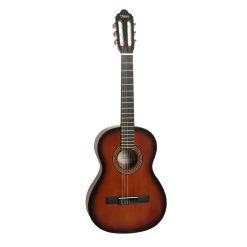
Valencia VC203CSB – 3/4 Size Classical Guitar – Satin Classic Sunburst
Bass Guitars

Reviews
There are no reviews yet.